Thursday, November 18, 2010
Google Reader
Google Reader is a very useful for finding out information. It's good for me because i can find out tech information alot more quickly than usual.

Tuesday, November 16, 2010
Tech Article
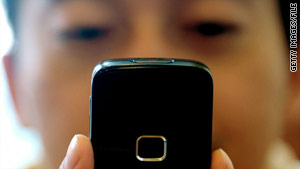
'Zombie' virus attacks more than 1 million cell phones in China
More than 1 million cell phones in China have been struck by the "Zombie" virus, according to Chinese state media, CCTV and Xinhua.
It's called the "Zombie" virus because it transmits from phone to phone, just as in the movies, zombie bites turn people into the living dead.
The virus binds with a security application, which then transmits the user's SIM card details to a central server controlled by a small group of hackers. The hackers then will send messages or make phone calls that contain virus-ridden links for games and software, said CCTV.
Receivers who follow the link will find their phones infected, too, while at the same time providing a "click through" for the link itself, which typically translates into a payment for a party publicizing the links. CCTV said that the blame is likely to lay with intermediary distributors instead of the actual game or software developers that show up in the ads.
Zhou Yonglin, an official with the National Computer Network Emergency Coordination Center, told CCTV that "in the first week of September, nearly 1 million cell phones in the country were infected with the virus."And although telecom providers are said to have taken steps to reduce the number of infected messages, Zou Shihong, a telecom expert at the Beijing University of Posts and Telecommunications, told CCTV that an updated virus might start sending fewer messages, making it harder for cell users to notice any suspicious activity.
Chendu Qimiao, the company behind the original infected security application, told CCTV that is has nothing to do with the virus, adding that it's difficult for users to tell which applications are infected and which are safe.
Thursday, November 11, 2010
tech article
Mozilla launches F1, a new way to share links

F1 gives users an all-in-one frame above the content they're viewing. Once your accounts are connected, you simply click the tiny F1 icon in the toolbar to share the page you're viewing with friends on Facebook, Twitter and Gmail.
(Those three services were chosen as the first three supported sharing mechanisms for F1 because of their popularity and OAuth implementation.)
In an ideal world, if every web user was a Firefox F1 user, publishers wouldn't have to provide the usual slew of sharing buttons, and users wouldn't have to connect their social accounts and login credentials to scores of websites around the Internet.
Sharing would be more secure, simpler and (let's face it) a lot easier on the eyes than it is now.
As a Mozilla Labs project, F1 is still being expanded.
As Mozilla designer Bryan Clark wrote today on the company blog, "[Eventually], the system should know which sharing service you use, and offer to use those! That will require sharing services to advertise to the browser that they offer a sharing API and the browser to see which services you use.
"Furthermore, sharing is not a standardized activity, so some protocol is likely needed for user agents to offer users the service they want without having to know about all of them."
He also emphasized that publishers can also experiment with this feature; interested parties should check out the F1 wiki for details.
While we've seen similar cross-browser, all-in-one sharing frames and toolbars in the past, this offering from Mozilla is particularly well designed. In fact, we wish there was a cross-browser standard for social sharing; all these buttons have got to go at some point.
http://www.cnn.com/2010/TECH/web/11/11/mozilla.f1.mashable/index.html
Wednesday, October 27, 2010
TECH ARTICLE
Microsoft is a dying consumer brand
Consumers have turned their backs on Microsoft. A company that once symbolized the future is now living in the past.
Microsoft has been late to the game in crucial modern technologies like mobile, search, media, gaming and tablets. It has even fallen behind in Web browsing, a market it once ruled with an iron fist.
Outgoing Chief Software Architect Ray Ozzie called out Microsoft's lost ground in a blog post over the weekend.
"Our early and clear vision notwithstanding, competitors' execution has surpassed our own in mobile experiences, in the seamless fusion of hardware & software & services, and in social networking & myriad new forms of internet-centric social interaction," he said.It's not like Microsoft didn't foresee the changes ahead. With a staff of almost 90,000, the company has many of the tech world's smartest minds on its payroll, and has incubated projects in a wide range of fields that later took off. Experiments like Courier (tablets), HailStorm/Passport (digital identity), and Windows Media Center (content in the cloud) show the company was ahead of the game in many areas -- but then it either failed to bring those products to market, or didn't execute.
Some influential analysts think not. Several have downgraded Microsoft's stock in recent weeks, as PC sales continue to slow and Microsoft struggles with its tablet strategy. The company's stock is down more than 17% this year.
What's wrong with Microsoft
A rundown of Microsoft's major consumer projects finds trouble in almost all of them. Internet Explorer's popularity has been waning for years, and one recent study showed that for the first time in more than a decade, more people are using alternative browsers. The browser is becoming the single most critical piece of software on a device -- potentially eclipsing the operating system -- but all of the major innovations of the past few years, like tabbed browsing and add-on extensions, came from outside Microsoft.
Windows Phone 7 has promise, but Microsoft dug itself an enormous hole with the subpar Windows Mobile platform. With its market share currently sitting below 5%, developers are taking a "wait and see" approach.Microsoft's media platform Zune was dead on arrival.
Bing is growing, but substantially all of that growth has come at the expense of its business partner, Yahoo -- not its archrival Google.
Microsoft's attempts to build a social network through Windows Live have failed to gain traction. It has no real answer to Facebook.
Six months after Apple's release of the iPad, Microsoft still has virtually no presence in the tablet market. And its strategy for taking on Apple -- Windows 7 on a tablet, rather than a tablet-specific operating system -- is leaving potential partners cold. Lenovo's technology director recently told PC Mag that his company won't be building around the platform: "The challenge with Windows 7 is that it's based on the same paradigm as 1985 -- it's really an interface that's optimized for a mouse and keyboard."
With Xbox, Microsoft succeeded at innovating: It created a competitive video game brand for hardcore gamers. But even Xbox was outdueled by Nintendo with the Wii, which outsold Xbox by appealing to casual gamers. Then there's the epicenter of the Microsoft universe: Windows. Microsoft likes to point out that its operating system is its biggest consumer brand and Windows 7 has been selling rapidly. Its new version has sold 240 million licenses in a year, making it the fastest-selling OS in Microsoft's history.
But Windows' momentum isn't from consumers. In fact, consumers are a worry for the Windows division, because they have dramatically slowed their purchases of PCs in recent months.
Rather, the fast sales are coming from businesses, which significantly delayed their purchases of new Windows licenses because Windows Vista was bug-ridden mess. Then the recession hit. A years-overdue corporate PC refresh cycle is now happening all at once.
Meanwhile, Microsoft's executive suite is in turmoil. CFO Chris Liddel, entertainment unit head Robbie Bach, device design leader J Allard and business division chief Stephen Elop have left within the past year. Ray Ozzie joined the exit parade last week.
Consumers matter
As Apple has proven, success in consumer products can fuel explosive growth. Apple surpassed Microsoft's market value earlier this year, and is on pace to eclipse the company in sales for 2010.
And if Microsoft cedes consumer ground, it risks its enterprise stronghold. Businesses are becoming more willing to allow employees to use their personal devices for work purposes, and a growing number of those gizmos are Macs, iPads, iPhones and Android smartphones.
So it's up to Microsoft to turn that around by being a leader, rather than a follower, in the consumer market. Windows Phone 7 is a good start. Internet Explorer 9 has some exciting new features that other browsers lack. And Xbox's controllerless Kinect -- the first of its kind -- is coming this holiday season.
Microsoft just has to hope it's not too late.
Monday, October 18, 2010
My Weekend
This weekend i just hung out pretty much with my friend and went to rutherford. That's pretty much it.
Thursday, October 14, 2010
tech article 10/15/10
Google is testing cars that drive themselves
Google announced Sunday that it has developed cars that drive themselves automatically in traffic, and that it has been testing them on the streets of California for months. It might seem like an unusual project for Google, but it could actually have big benefits.We're not just talking about cars running Google Android. This is the stuff of science fiction. The only accident that has occurred so far: One of the cars was rear-ended by a driver at a stop light. Human error!The vehicles have been tested on 140,000 miles of California road, from Silicon Valley to Santa Monica.Each car is manned during the tests. One person sits in the driver's seat, ready to take control of the vehicle instantly by grabbing the wheel or touch the brake should something go wrong with the system. The person in the passenger's seat is an engineer who monitors the software operations on a computer.Google (Google) hired engineers who previously participated in competitions and races involving automated cars -- important turning points in the development of the technology, which has been coming into its own since around 2005 according to The New York Times.If your first concern is one of safety, Google would argue that you're going about it all wrong.Safety is one of the the project's purposes. Google believes that the technology could nearly half the number of automobile-related deaths because computers are supposedly better at driving than humans in the right circumstances.There are other hypothetical pluses, too. The vehicles' instant reaction time and 360-degree awareness would allow them to drive closer together on the highway than humans can, reducing traffic congestion. They could be more careful when operating the gas, reducing fuel consumption.But the biggest benefit for Google would be the hour or so of daily commute time the car owner would save. Instead of driving, he or she could either be productive or entertained in the vehicle, doing work on a wireless Internet (Internet) connection or watching television.Google doesn't say it explicitly, but TechCrunch was quick to notethat this time could be spent using Google products and absorbing Google-run advertising.The most optimistic projections put this technology at least eight years away from market, though. Legal hassles are among the myriad problems; all of the current traffic laws assume that a human driver is present in the vehicle.
Subscribe to:
Posts (Atom)